The Ikigai Explorer

Article 8: A Life of Purpose
Introduction
After all the stories, trials, and turning points, we arrive here, at the convergence. This isn’t the end of the road; it’s the beginning of walking it with full awareness. If you’ve been following this series, you’ve looked back at your earliest instincts, navigated false paths, reclaimed identity, and embraced growth. Now it’s time to chart a course forward.
This final article isn’t about closure. It’s about clarity. It’s about using everything you've gathered along the way to build a life rooted in who you truly are. A life of purpose. A life of Ikigai.
The Ikigai Explorer
Over the years, I’ve learned something simple yet profound: life is comprised of limited resources —time, energy, and money. Most choices will cost you at least one of those, and often two or three. The sooner you truly know yourself, the sooner you’ll stop wasting those resources on things that don’t fulfill you.
This is why self-knowledge isn’t some abstract luxury. It’s a tool of survival. A tool of design. Without it, we’re just spinning wheels, busy, stressed, distracted, and still empty. But once you know what matters, you can stop paying rent to the wrong life.
It’s become my personal philosophy to spend as much as you can justifiably afford on the things that bring you fulfillment, the right tools, the right trips, the right materials to create the work that matters to you. And to spend as little as possible on the things you don’t care about. However, to do that responsibly, you must first understand what those things are. You must know your essentials.
So here’s a practice I recommend: Make a list of what you genuinely care about. Not what you wish you cared about. Not what you think sounds noble or impressive. Just the real, raw list of what actually brings you value.
If your list has more than 12 things on it, you’re probably still honing your sense of self, and that’s okay. That list should act like a compass. When you're stuck between two choices, ask which one serves something on the list. If it's not on there, let it go. Those things are distractions. And in a life where resources are limited, distractions can be costly.
Creating a Mission Statement
Most companies have a mission statement. It serves as their guide in all decision-making. Individuals should have one too. This statement or motto should be something you can hold up to opportunities, goals, and choices to see if they align.
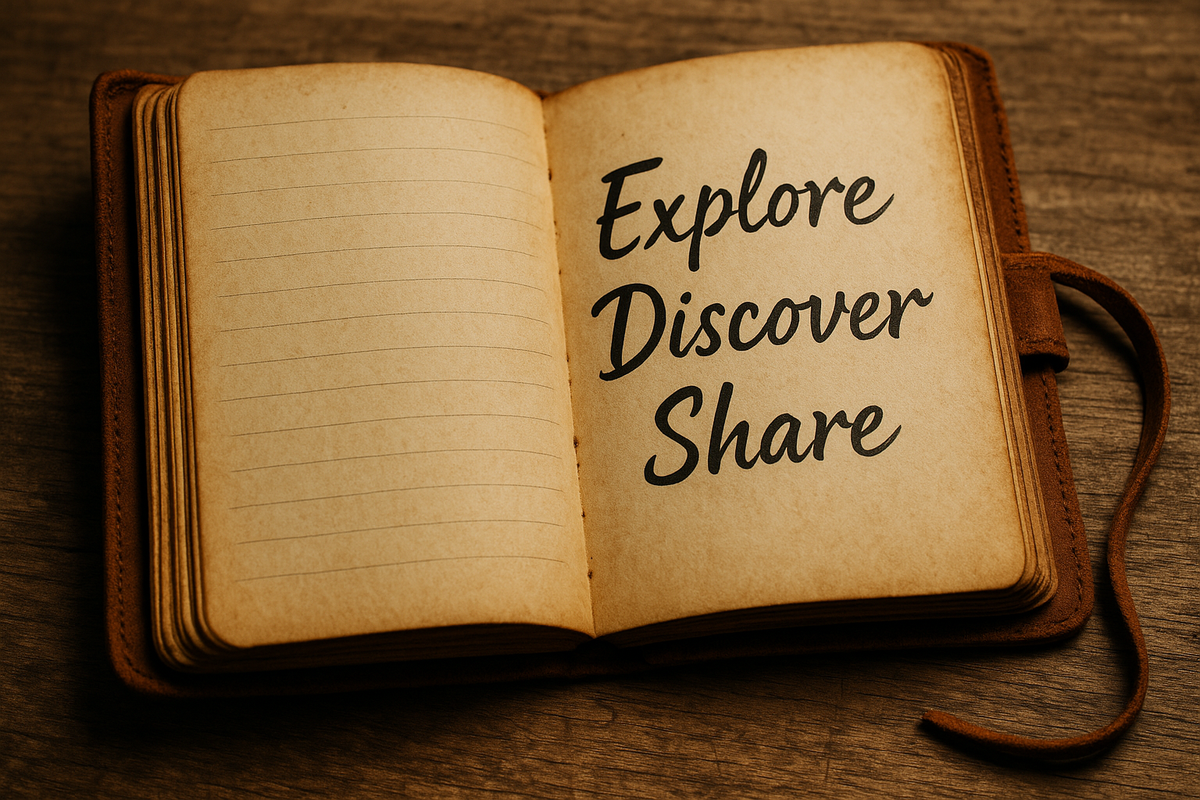
Mine came from years of trial and reflection: Explore. Discover. Share. That’s it. That’s the heartbeat behind everything I do.
- Explore the world with open curiosity and an adventurous heart.
- Discover insights and artifacts through expeditions and experiences.
- Share those discoveries through documentation in ways that educate, entertain, or inspire others.
That phrase is more than branding; it’s a living commitment to the person I want to be.
A Timeless Identity
When searching for your authentic self, what is at the core of your soul, I personally think your view of yourself should be timeless and big picture. By this, I mean something that would make sense in any country, at any point in history, at any level of technology.
For example: “I am a healer, a designer, a protector,” rather than “I am an X-ray technician or Photoshop artist.”
It should be bigger than a job title.
For me, it is this: “I am an explorer who seeks to document his adventures for the education and entertainment of others.”
That is a statement that outlines a pursuit that is timeless and not linked to a geographical region.
That explorer, documentarian is how I approach all aspects of my life, not just work. Remember, the greatest privilege or goal to attain in life is to know and be yourself. Once you know this, you can handle the insanity of life by choosing to withdraw your energy from this world and collect it. Stop caring about useless things, focus on what you love, your purpose, and what you can control.
So ask yourself:
- What’s your mission statement?
- Can you define your values in a sentence or a few simple words?
- Does it reflect not who you wish you were, but who you are at your best?
You don’t have to get it right on the first try. But it’s worth working at.
Reflections
Here are some parting questions to help guide you into this next phase:
- What are you willing to spend your limited resources (time, energy, money) on?
- What do you want your children, or your future self, to remember about the life you built?
- What parts of your identity have stood the test of time?
- What are you trying to prove, and to whom?
- Are you spending your life, or investing it?
Closing Thought
You don’t need to be perfect. You need to be intentional.
You don’t need to have all the answers. You need to ask the right questions and be brave enough to answer them honestly.
The explorer’s journey doesn’t end at discovery; it starts there. The more you learn about the world, the more you’ll learn about yourself. And the more you understand yourself, the better you can serve, create, and live.
If you’ve read this far, you’re already on the path. You are a seeker. A storyteller. A mapmaker. You are the hero of your own story.
So write it well. And never stop exploring.